For the past three school years, teachers in all New York City public schools have been given the results of student perception surveys.
Teacher Voices
Who is the Next Nye?
Many science teachers daydream of being Bill Nye someday and, until recently, I was no exception.
Teacher Voices
My Journey to a Blended Learning Classroom
As a teacher with 24 years of experience in mathematics education, I have learned that change is the only constant, and that we never stop learning and must always evolve to meet the needs of our chan
Teacher Voices
What Society Doesn’t Acknowledge Enough: Learning is Hard
Learning can be the source of a lot of frustration.
Teacher Voices
Making Our Mark: How Teachers Grow With, and Within, the MƒA Community
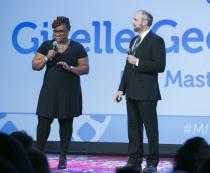
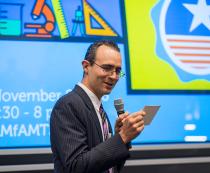
At the 11th Annual MƒA Fall ƒunction gala, MƒA Master Teachers Giselle George-Gilkes and Patrick Honner were invited to speak about the power of the MƒA community as our featured teacher presentation
Teacher Voices
Citizen Can
Early on during my first tour of duty with Math for America, my wife and I were invited to a small MƒA dinner with about 50 dapper adults. We sat next to a lovely couple and the gentleman asked how I
Teacher Voices
A Call to Action: Create Opportunities for Students to take Climate Action
The impacts of climate change are here, now. Extreme weather events and rising sea levels are affecting communities across the world today, and will continue to do so with mounting severity.
Teacher Voices
Make Them, Not Break Them: Helping New Teachers to Succeed
After a full day of teaching, I used to eat meals on the train to get to my graduate classes on time. I lost three pants sizes between 2007 and 2008 because I wheeled a laptop cart around a massive sc
Teacher Voices
Why We're Better Together
Teaching is the most complex job in the world. We shape the future. We motivate students, deal with ever-changing expectations, and tackle mounds of paperwork. Through it all, we operate within a syst
Teacher Voices
With Gratitude from a Lifelong Learner
To put it kindly, my teaching career has entered its second half. By rough estimate, that amounts to 3,000 students, or 30,000 exams graded (at the ridiculously low rate of 10 tests per year), surely