Stories
How MƒA Master Teacher Jeanne Salchli assists fellow teachers in order to drive meaningful change in science and STEAM education.
As a veteran teacher of elementary science, Jeanne Salchli had always wanted to attend one of the flagship events held annually by the National Science Teaching Association (NSTA), a community of more than 35,000 science educators devoted to promoting and celebrating the importance of teaching science and STEM. “It was a big dream of mine to go to an NSTA conference, and I was never able to figure out a pathway to go,” Salchli says.
Image
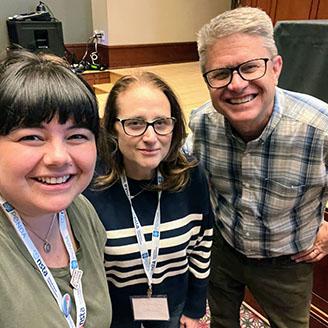
In 2023, with the support of an MƒA impact grant, Salchli finally got the chance to attend that year’s NSTA National Convention in Atlanta, Georgia. She was especially inspired by the teachers she saw there who had started in the classroom and then gone on to leadership roles all the way up to the national level. “Seeing their passion and impact made me realize I could also expand my influence beyond my classroom.”
In a session called “Navigating a Path to Science Leadership,” Salchli gained actionable strategies for moving into leadership roles and supporting teachers, including leadership self-assessments, goal-setting templates and tips for effective collaboration. “One thing I’ve experienced is that many teachers don't feel confident in teaching science, not just in terms of the content area knowledge but also the pedagogical knowledge,” she says. “I’m trying to approach it from a level of understanding what teachers’ fears are, and trying to create opportunities and support for them in the classroom.”
With these resources and increased confidence, Salchli took the leap into leadership, becoming both a Peer Collaborative Teacher and a lead teacher for Urban Advantage, a collaboration between the NYC Department of Education and eight of the city’s science-focused cultural institutions — including the American Museum of Natural History, Brooklyn Botanic Garden and Bronx Zoo — to improve public school science education. “In these roles, I mentor and coach teachers across New York City public schools, helping them implement NGSS-aligned, three-dimensional learning,” Salchli says.
At the school level, she focused on coaching her colleagues in their efforts to create effective and engaging project-based learning (PBL) units. To succeed in PBL, teachers “need a willingness to learn alongside their students,” Salchli says. “You can guide your students along, but part of it is taking what they are interested in and guiding the learning that way.”
Image
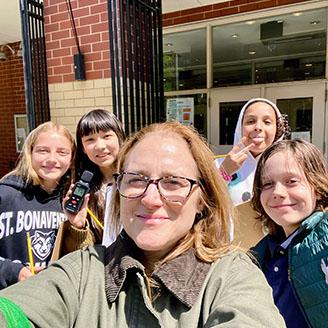
When one kindergarten teacher at her former school wanted to teach her students about composting, Salchli helped her plan the project and ensure it was accessible for all students. In addition to hands-on work in the school’s garden, they incorporated digital tools to help students track compost data and create visual presentations of their work. The kindergartners became enthusiastic advocates for composting and ended up representing the entire school at the annual district-wide STEAM Fair. “They were so invested in the work they were doing that they could articulate what their driving question was, and had all the background knowledge to answer questions,” Salchli says.
Now teaching at P.S. 343 in Sunnyside, Queens, Salchli works as a science lead for her district. In that role, she is seeking to build teachers’ confidence, enhance their instructional practices and encourage collaboration in order to benefit thousands of students across the district’s 40 schools. “My plan includes curating resources, facilitating targeted professional development and leveraging MƒA connections to bring innovative ideas and tools to our district,” Salchli says.
Beyond her experiences with the NSTA conference, Salchli has gained invaluable support and resources in her five years with MƒA. She still has the same worm bin from one of the classes she took her first year in the program, and credits three courses — Environmental Justice with EcoRise, Introduction to NYC’s Water Story with the Department of Environmental Protection, and Teaching Trees with the Watershed Agricultural Council — with transforming how she approaches environmental education in her classroom. This summer, with the help of another impact grant, Salchli will travel to the Amazon rainforest in Peru to explore rainforest ecology, biodiversity, and conservation with the Morpho Institute.
“MƒA is really valuable to me, because not only do I learn from great informal educators like the educators from the Department of Environmental Protection, but I've learned so much from other elementary school teachers and middle school and high school teachers as well,” Salchli says. “The community is incredibly supportive.”
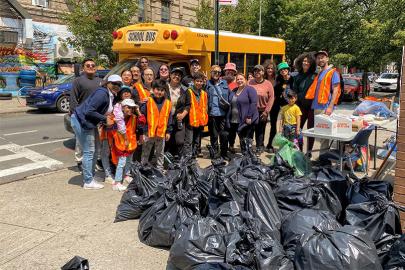
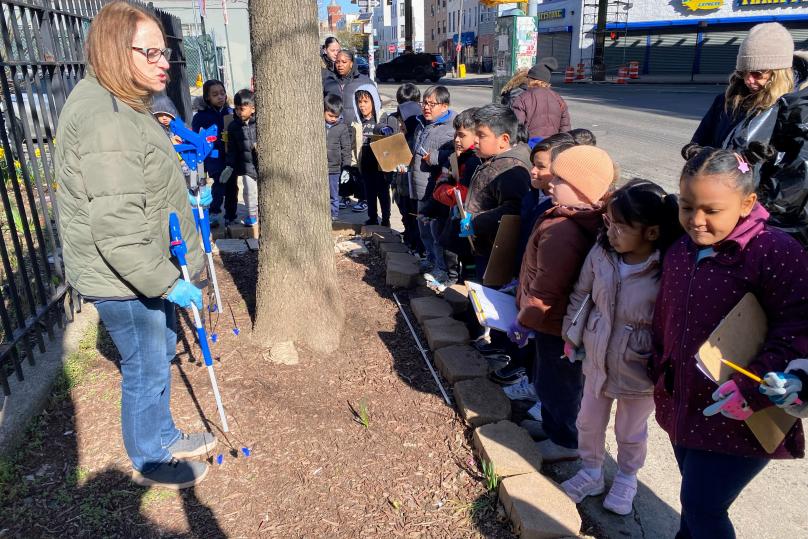
Partnering with Council Member Sandy Nurse and NYC H2O, Salchli's fifth graders organized a neighborhood cleanup and collected more than 500 pounds of trash in just two hours while making a positive impact on their community.